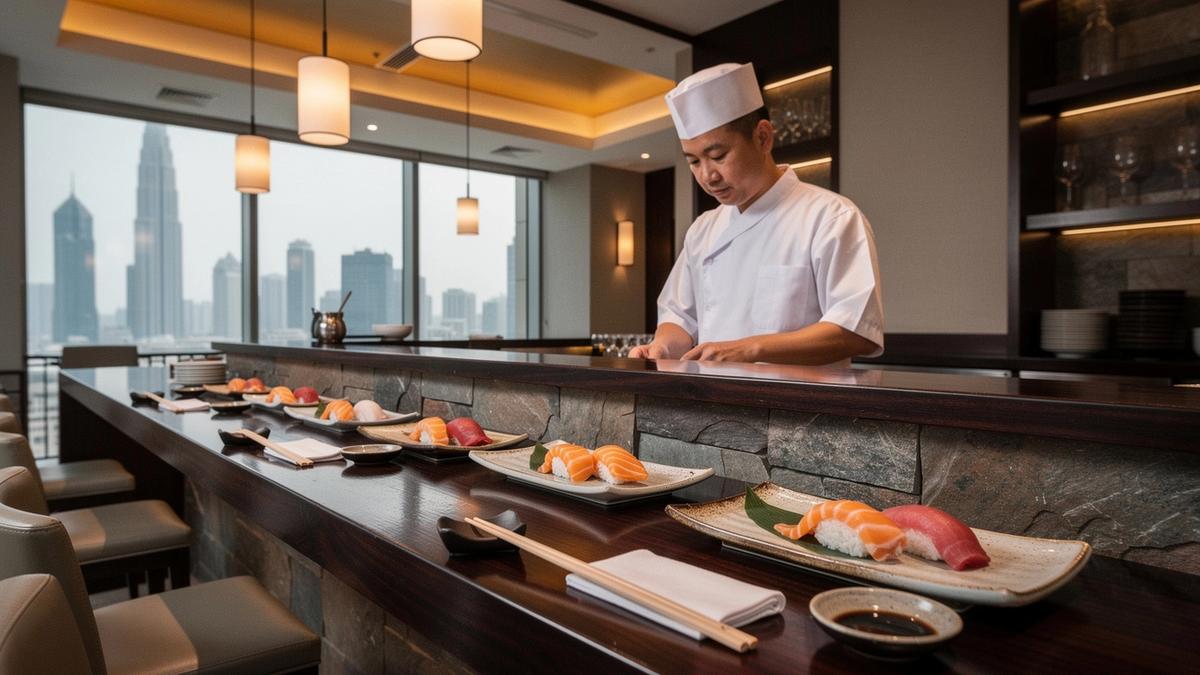
Great sushi looks effortless, but it’s the result of tight controls: temperature, handling, sharp knives, and rice that’s seasoned and timed precisely. Whether you’re ordering à la carte or sitting at an omakase counter, use the checks below to tell “fresh and skillful” from “fine, but not premium.”
1) Fish freshness: what your eyes and fingers should notice
- Color should be clean, not loud. Tuna should look deep and even, salmon should be vivid but not fluorescent, and white fish should read pearly/opaque with a slight translucence—not chalky.
- Surface should be moist, not wet. A gentle sheen is normal; pooled liquid or a slippery film is a warning sign (often from thawing and refreezing or poor holding).
- Texture should spring back. When you press lightly, the fish should feel resilient. Mushiness can indicate breakdown from time, temperature swings, or improper thawing.
Quick “counter” checklist
Smell: clean, ocean-like; never sour or fishy.
Touch: firm, no tackiness.
Look: no ragged edges, no gray/brown patches.
Mouthfeel: silky bite, not cottony or watery.
2) Rice quality: the quiet giveaway
In high-end sushi, rice isn’t filler—it’s a timed, temperature-sensitive component. Bad rice can hide under great fish, but it will always show up in the bite.
- Temperature: rice should be slightly warm or room temp, while the fish is cool. Ice-cold rice is a common shortcut and flattens flavor.
- Grain definition: you should see individual grains, yet they hold together. If it’s paste-like, overcooked; if it crumbles, under-seasoned or poorly shaped.
- Seasoning balance: a gentle sweet-sour aroma (vinegar + salt + sugar). If it tastes sharp or flat, the seasoning or resting time is off.
- Compression: top sushi feels light. Over-compressed nigiri is dense and chewy.
3) Cut and craftsmanship: knife work you can spot
Knife technique affects tenderness more than most diners realize. A skilled cut is consistent, clean, and designed for the fish’s grain.
- Clean edges: slices should look smooth, not shredded. Ragged edges often mean a dull knife or rushed prep.
- Thickness that matches the fish: fatty fish (like toro) is often cut a touch thicker; leaner fish may be thinner to keep the bite tender.
- Scoring where appropriate: some squid and firm white fish are lightly scored to improve tenderness and help sauce cling—done neatly, not gouged.
4) Signs of strong handling and storage
“Fresh” isn’t only about how recently the fish arrived—it’s about how it’s stored, dried, and held. In top kitchens, some fish is rested (aged) on purpose for better texture and umami, but it’s controlled and precise.
| What you notice | Often means | Better sign |
|---|---|---|
| Watery plate / drips | poor thawing or holding | dry, clean presentation |
| Strong “fishy” aroma | oxidation / time-temp issues | neutral, ocean-fresh scent |
| Spongy, cottony chew | cell damage from freezing cycles | springy, silky bite |
5) How to order to test quality (without being that guest)
- Start simple: tuna, salmon, and a clean white fish (like sea bream) reveal handling and knife work.
- Add one texture test: scallop or squid will show whether the kitchen nails tenderness.
- Then go for a specialty: toro, uni, or an in-season fish—premium items should feel notably better, not just pricier.
Reading this because you’re planning a night out? Pair these freshness cues with smart ordering and counter etiquette in our guides: Sushi etiquette basics and Omakase vs à la carte. For more, browse all articles.